
Even in loving relationships, long-term imbalance can erode patience and spark resentment.
A woman in her late twenties recently opened up about her frustrations living with a husband who, despite being financially stable and mentally healthy, contributes little to the upkeep of their shared life.
While she works long hours and earns significantly more, he spends his free time gaming, leaving her to manage nearly every household task herself.
She tried to give him opportunities to step up, assigning chores and responsibilities as a test of his willingness to engage.
When he failed repeatedly, she disengaged, allowing the house to fall into disarray and refusing to take care of him or the chores she had been handling alone.
Scroll down to see how this imbalance in contribution and accountability has left her questioning the future of her marriage and whether giving up was justified.
A woman stops putting effort into her marriage after realizing her husband won’t step up
























Few situations feel more emotionally draining than realizing the person you committed to relies on you entirely, yet refuses to reciprocate.
Most people enter marriage expecting partnership, shared responsibility, and mutual respect.
When those foundations are absent, feelings of resentment, exhaustion, and isolation naturally build.
The more effort one invests while receiving little in return, the more justifiable it becomes to protect one’s own energy and boundaries.
At the heart of this story is a deep imbalance in household and emotional labor.
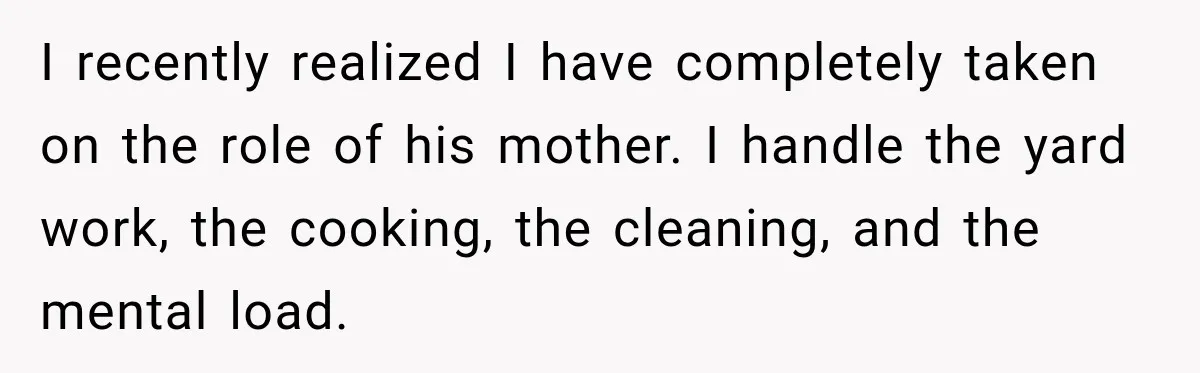
The OP has shouldered nearly all responsibilities: managing finances, handling homeownership logistics, maintaining the yard, cooking, cleaning, and sustaining the mental load of daily life.
Her husband, despite being fully capable, engages primarily in gaming and passive leisure, often using his bipolar disorder diagnosis as an excuse to avoid shared duties.
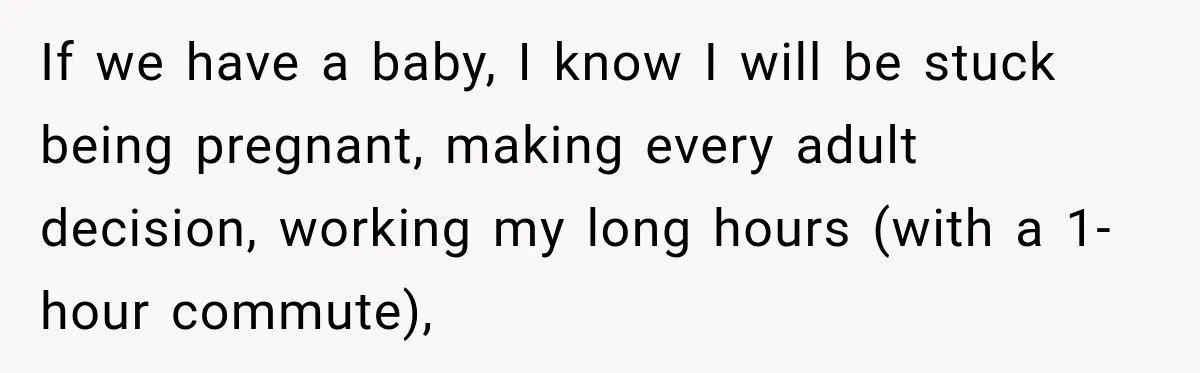
The frustration is compounded by his insistence on having children, which the OP correctly recognizes would cement a pattern of unequal caregiving, leaving her solely responsible for the child, household, and career obligations.
A fresh perspective comes from understanding the psychology of labor equity in relationships.
Social science research shows that partners who consistently avoid household and emotional responsibilities create what psychologists term “inequitable marriage dynamics,” which are strongly correlated with resentment, burnout, and relationship dissolution.
Perceptions of fairness and contribution are more predictive of long-term relationship satisfaction than income alone.
Even when one partner earns more, unequal division of labor can result in significant emotional and physical stress for the other.
Experts emphasize that withdrawing effort in response to sustained inequity is often a form of self-preservation rather than malice.
Dr. Deborah Serani, a clinical psychologist specializing in relational stress, explains that when one partner feels chronically unsupported, choosing to disengage is a coping mechanism to prevent further emotional depletion.
While it may manifest as letting household responsibilities slide, this behavior signals that the imbalance is intolerable and requires acknowledgment or structural change.
Interpreting this insight, the OP’s decision to refuse childcare, halt extensive cooking, and decline to have children is a rational boundary-setting action.
It is not an act of cruelty; it is a measured response to repeated neglect and inequity.
 Woman Calls Her Boyfriend’s Ex After He Disappears All Night, Now He Says She Humiliated Him
By “dropping the rope,” she communicates that the current dynamic is unsustainable and that meaningful change would require her partner to actively contribute.
Ignoring the imbalance would perpetuate resentment, increase emotional burden, and likely result in a future where she bears sole responsibility for home and family management.
Ultimately, the story illustrates that fairness and shared effort are central to marital sustainability.
Protecting one’s well-being, setting boundaries, and refusing to perpetuate unequal labor, even at the cost of short-term discomfort or household chaos, is ethically defensible.
The OP’s actions highlight that consent and partnership, not obligation, define a healthy marriage, and choosing self-preservation in the face of inequity is both reasonable and justified.
Here’s what Redditors had to say:
These commenters urged OP to leave the relationship immediately, emphasizing self-preservation and freedom from an unhealthy partnership







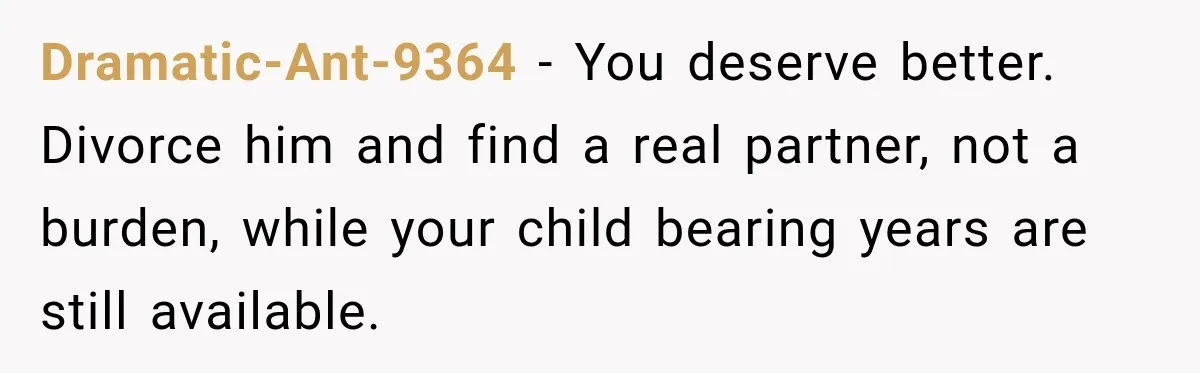
This group highlighted the risks of staying, particularly regarding future children, advising OP to consider reproductive and life planning when deciding to leave


This commenter contrasted supportive partners managing mental health and household responsibilities with OP’s husband













Do you think the wife was justified in stepping back after years of feeling unsupported, or did letting the household deteriorate push the relationship further into unhealthy territory? And at what point does helping a struggling partner become enabling behavior? Share your thoughts below.