
Sometimes family dining brings unexpected challenges.
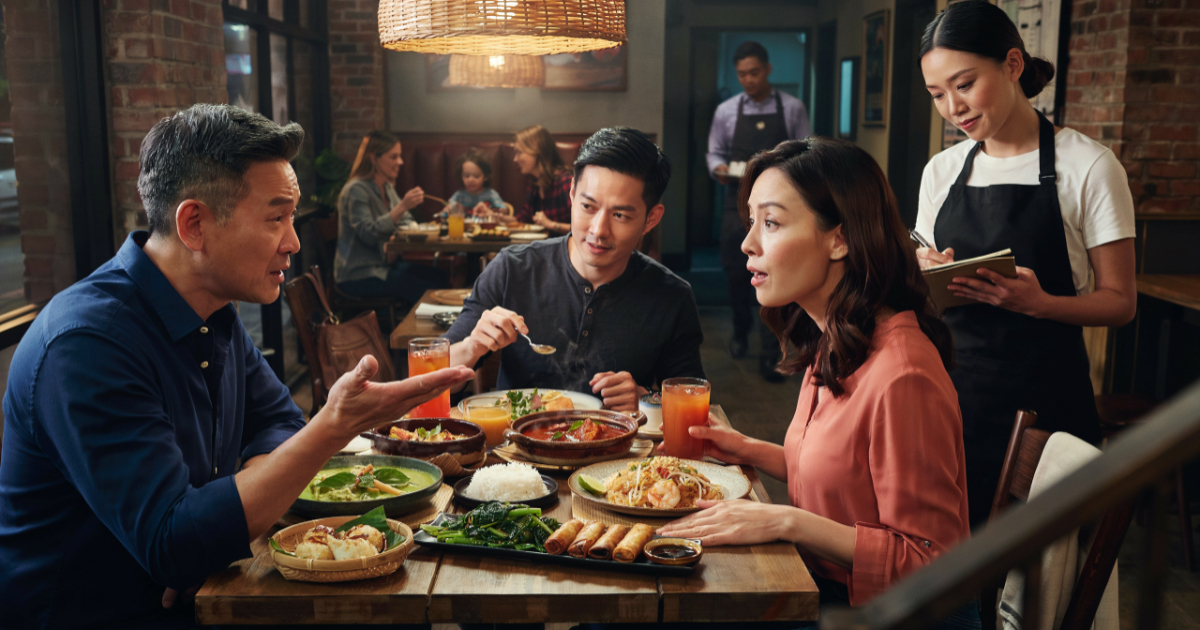
A man recently went to a Thai restaurant with cousins he rarely sees.
After they ordered, one cousin instructed the waitress to remove onions and garlic from all the dishes, not realizing that he loves both.
When he asked for his food as he wanted it, offering to share with his cousins, he was met with confusion and silent judgment.
The rest of the meal was awkward, leaving him wondering if his desire to enjoy his own dish made him the “bad” one.
Scroll down to see how one small clash over onions and garlic turned a simple dinner into a surprisingly tense situation.
A man insists on ordering his food with onions and garlic, clashing with his cousins’ rules



Few social situations are more fraught than shared meals with family, especially when personal preferences clash with long-standing group habiTS. Food is both deeply personal and socially symbolic, and expectations about how it should be consumed can trigger friction, even among close relatives.
Balancing individual taste with group norms requires both communication and respect.
At the core of this story is the tension between individual autonomy and shared expectations.
The OP clearly enjoys garlic and onions and wishes to include them in his meal.
The cousins, however, are used to a pattern of sharing dishes without those ingredients, which likely evolved from convenience or prior agreemenTS.
By asserting his own preferences, the OP challenged the implicit social rule, which created discomfort at the table.
Importantly, he also offered a compromise: his cousins could still sample from his dish if desired, showing an attempt at balance between personal preference and group cohesion.
A different perspective considers the psychology of social conformity and food sharing.
Research in social psychology indicates that people often assume shared norms will be followed, and deviations, even minor, can create confusion or social friction.
The cousins’ reaction reflects the expectation that communal meals involve compromise for the sake of harmony, not necessarily that the OP’s choice is wrong. However, experts also emphasize that individual preferences should not be suppressed; asserting them respectfully is part of healthy self-expression and boundary-setting.
From this lens, the OP’s decision is reasonable.
He communicated his preference clearly, allowed others to participate if they wished, and respected the shared context by offering to share.
The awkwardness at the table reflects adjustment to a new dynamic rather than ethical failure or selfishness.
Maintaining autonomy in such situations promotes authenticity and prevents resentment from quietly building over repeated compromises.
The most constructive takeaway is that family dining is a negotiation between individual preference and shared tradition.
Open, respectful communication, like the OP’s compromise, allows both personal choice and group enjoyment to coexist.
While some initial awkwardness is natural when norms are challenged, respecting one’s own tastes while accommodating others where possible is a healthy balance that strengthens, rather than weakens, social bonds.
See what others had to share with OP:
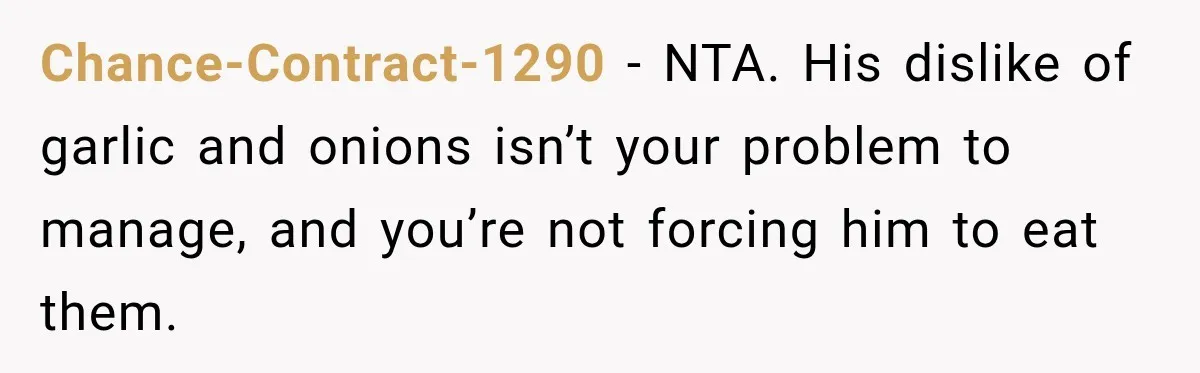
These commenters emphasized that OP is NTA, noting that no one has the right to dictate what others order or eat at a restaurant


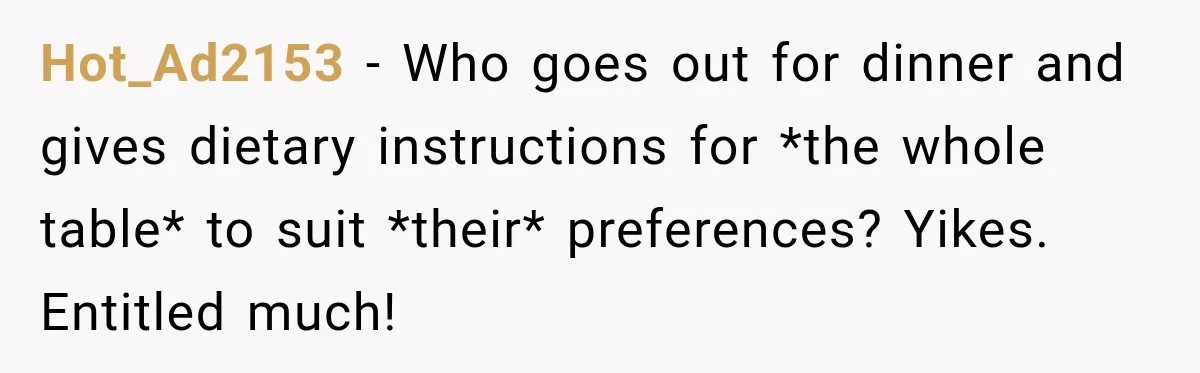

This group questioned the rationale behind the cousin’s restrictions
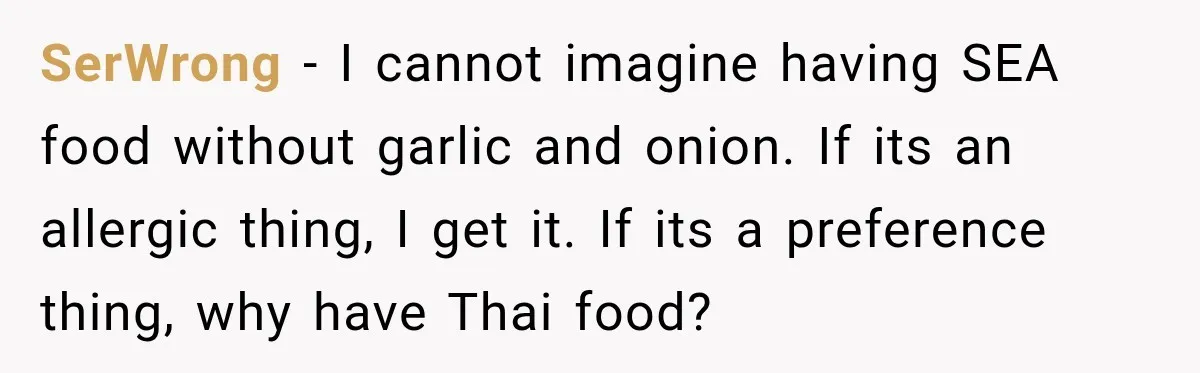






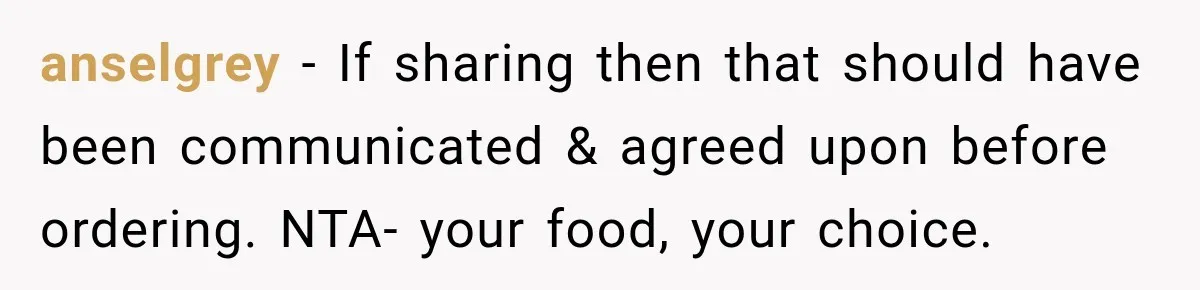
These Redditors stressed that sharing rules should be communicated in advance and that individual choices about food are valid, reinforcing OP’s autonomy



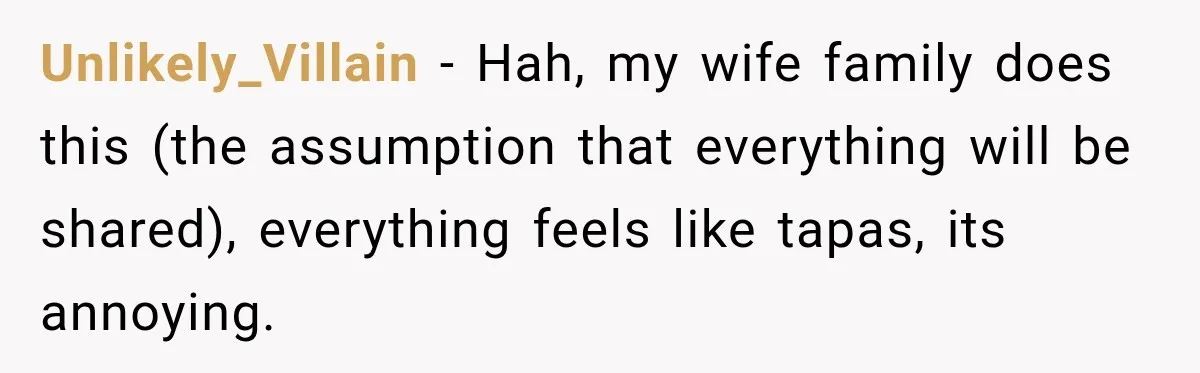
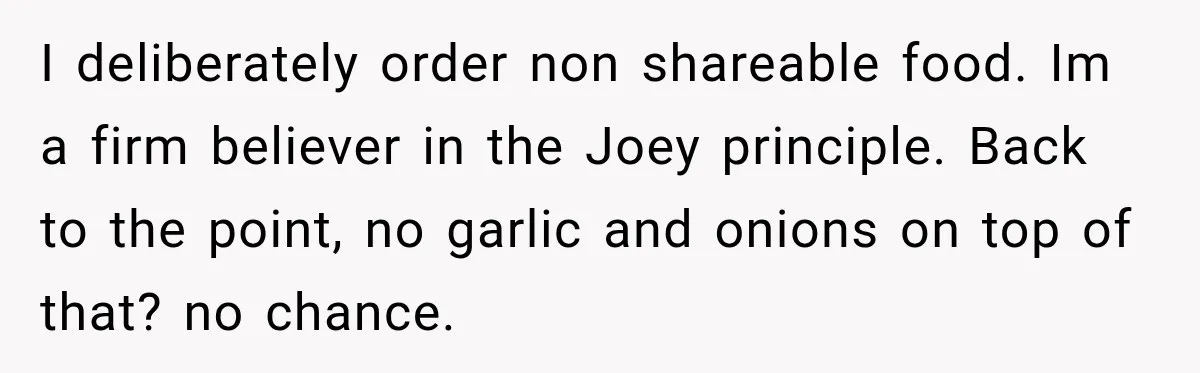
This group criticized entitlement and bratty behavior





What do you think? Should family-style dining mean everyone adjusts to the pickiest eater, or should each person be free to order the meal they’ll actually enjoy? How would you have handled the situation? Share your thoughts below.