
Sometimes the hardest boundaries to enforce are the ones closest to home.
Family dynamics can make even reasonable requests feel like a storm waiting to happen.
This Redditor is dealing with a delicate situation after her girlfriend’s younger sister repeatedly insulted him in front of both families during a dinner at their apartment.
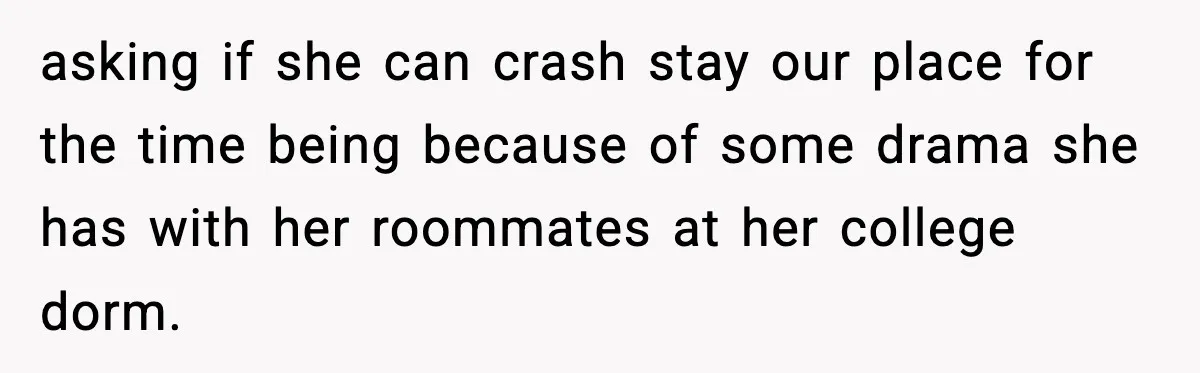
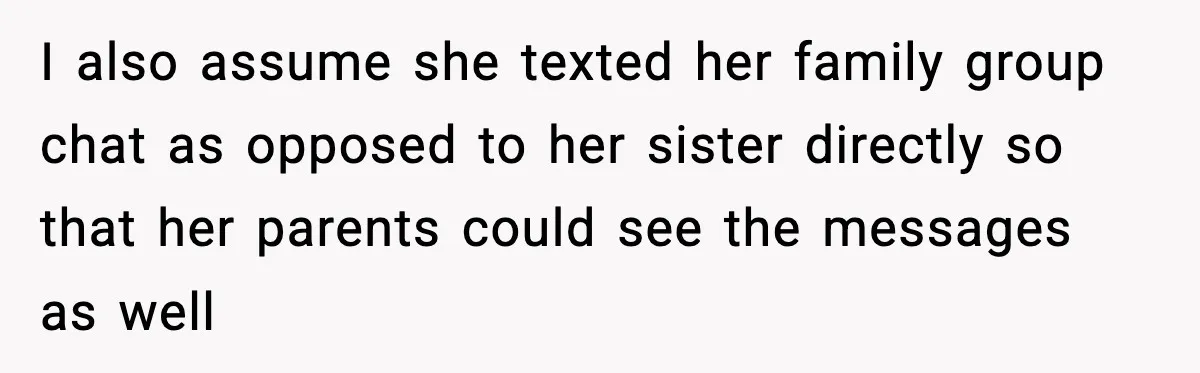
Now the sister wants to stay at their home temporarily due to issues with her college dorm, but OP is refusing, citing a history of disrespect and boundary-crossing.
Read on to see why standing up for himself has caused tension between him and his girlfriend.
A man set a firm boundary and refused to let his girlfriend’s disrespectful younger sister stay at their apartment






























Boundaries are one of the clearest indicators of respect in a relationship.
When someone repeatedly disrespects you, especially in your own home, it is reasonable to establish limits to protect your emotional well-being.
In this situation, the OP was not rejecting a guest arbitrarily; he was responding to repeated instances of personal attacks that undermined his comfort and dignity, both in private and in front of families.
The conflict revolves less around hospitality and more around respect.
The emotional tension comes from the difference between familial loyalty and personal boundaries.
The girlfriend and her family appear to interpret Emily’s behavior as harmless teasing or a familial quirk, while the OP experiences it as invasive, demeaning, and persistent.
The core issue is that Emily has repeatedly made comments targeting his appearance, friends, and self-worth, and prior requests to stop have gone unheeded.
This creates a situation where the OP’s home, which should be a safe and neutral environment, has become a place of stress and discomfort.
A useful psychological perspective comes from therapist Nedra Glover Tawwab, who writes extensively about healthy boundaries in relationships.
She explains that boundaries are not about controlling others but about establishing what behavior is acceptable and protecting one’s emotional space.
 Engagement Broken: Man Passes Out at Music Festival, Fiancée Prioritizes Concert Over His Health
Continuing to tolerate repeated disrespect can erode self-esteem and create resentment, which often impacts the romantic relationship itself.
From this perspective, the OP’s decision to deny Emily a stay is consistent with maintaining a healthy boundary.
It is not about being petty or unhelpful; it is about ensuring that someone who has repeatedly crossed limits does not have unchecked access to his private space.
The girlfriend’s frustration seems rooted in prioritizing family over her partner’s comfort, but compromise should not come at the cost of repeated disrespect.
Allowing Emily to stay could reinforce the message that her behavior is tolerated and acceptable, further undermining the OP’s sense of safety.
At the same time, communication is key.
The OP has set a clear boundary, but it may help to explain to his girlfriend calmly that his refusal is not a rejection of her or her family, but a necessary step to protect his home environment.
Establishing alternative solutions—such as Emily staying with another relative or friend—can demonstrate empathy while maintaining limiTS. Boundaries are an act of self-respect and can coexist with care and consideration for others.
Ultimately, refusing to let someone into your home who has repeatedly disrespected you is not only reasonable—it is responsible.
Respect and safety in shared spaces are essential in maintaining healthy adult relationships.
The OP’s stance is a firm yet appropriate boundary that prioritizes dignity without being unnecessarily hostile.
Take a look at the comments from fellow users:
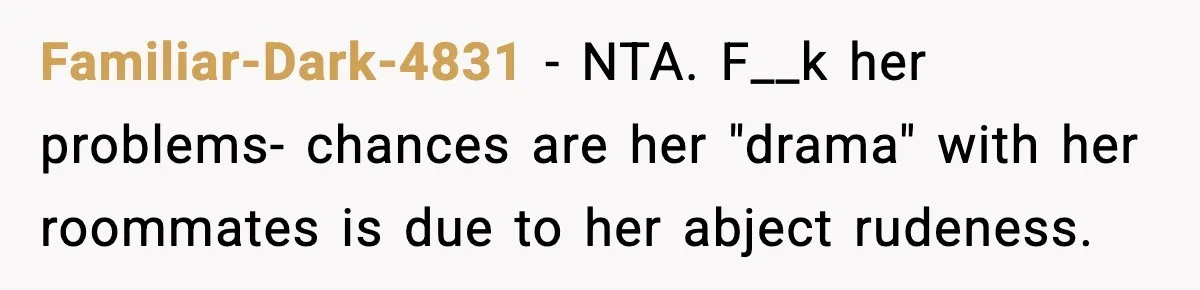
These commenters agreed OP is NTA and shouldn’t tolerate disrespect in his own home


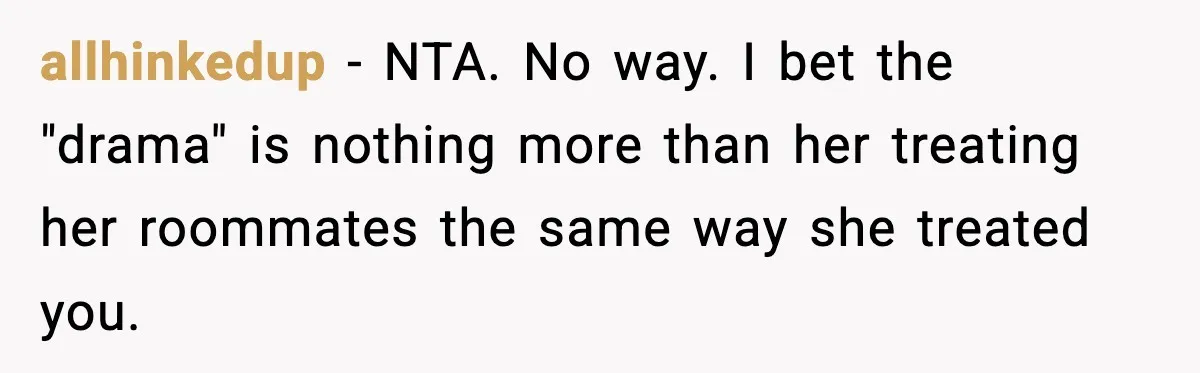



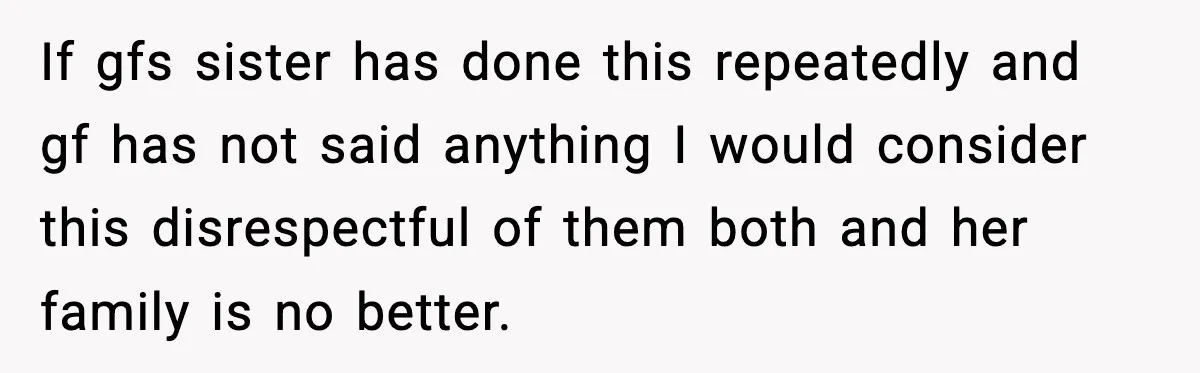
This group emphasized that the real problem is the girlfriend’s lack of support and failure to defend OP













Have you ever had to enforce a boundary against family? Would you support a partner in this kind of situation, or prioritize family harmony? Share your thoughts below.